Aluminum Bar Supply: What to Know Before You Place an Order
Aluminum bar is used across manufacturing, construction, fabrication, transportation, maintenance, and countless other industries. Its combination of low weight, corrosion resistance, machinability, and strength makes it a practical material for everything from structural components to custom machined parts.
Still, ordering aluminum bar is not as simple as choosing a length and quantity. The shape, dimensions, alloy, temper, tolerances, and processing requirements can all affect how well the material performs once it reaches the shop floor.
For businesses looking for dependable aluminum bar supply, understanding these details before placing an order can help reduce material waste, avoid production delays, and make fabrication easier.
Why Aluminum Bar Is Used in So Many Industries
Aluminum offers several properties that make it useful for both production and fabrication.
It is significantly lighter than steel, which makes it valuable when reducing overall component weight matters. Aluminum also naturally resists corrosion, making it suitable for products and components that may be exposed to moisture or changing environmental conditions.
Another major advantage is machinability. Many aluminum alloys can be cut, drilled, milled, turned, and formed efficiently, which helps manufacturers produce both simple and highly detailed parts.
Depending on the alloy and application, aluminum bar may be used for:
- Machine components and tooling
- Structural supports and framing
- Automotive and transportation parts
- Equipment components
- Fixtures and brackets
- Shafts, spacers, and pins
- Architectural details
- Custom fabricated assemblies
- Maintenance and repair work
Choosing the correct material from the beginning helps make each of these applications more predictable and efficient.
Start With the Right Aluminum Bar Shape
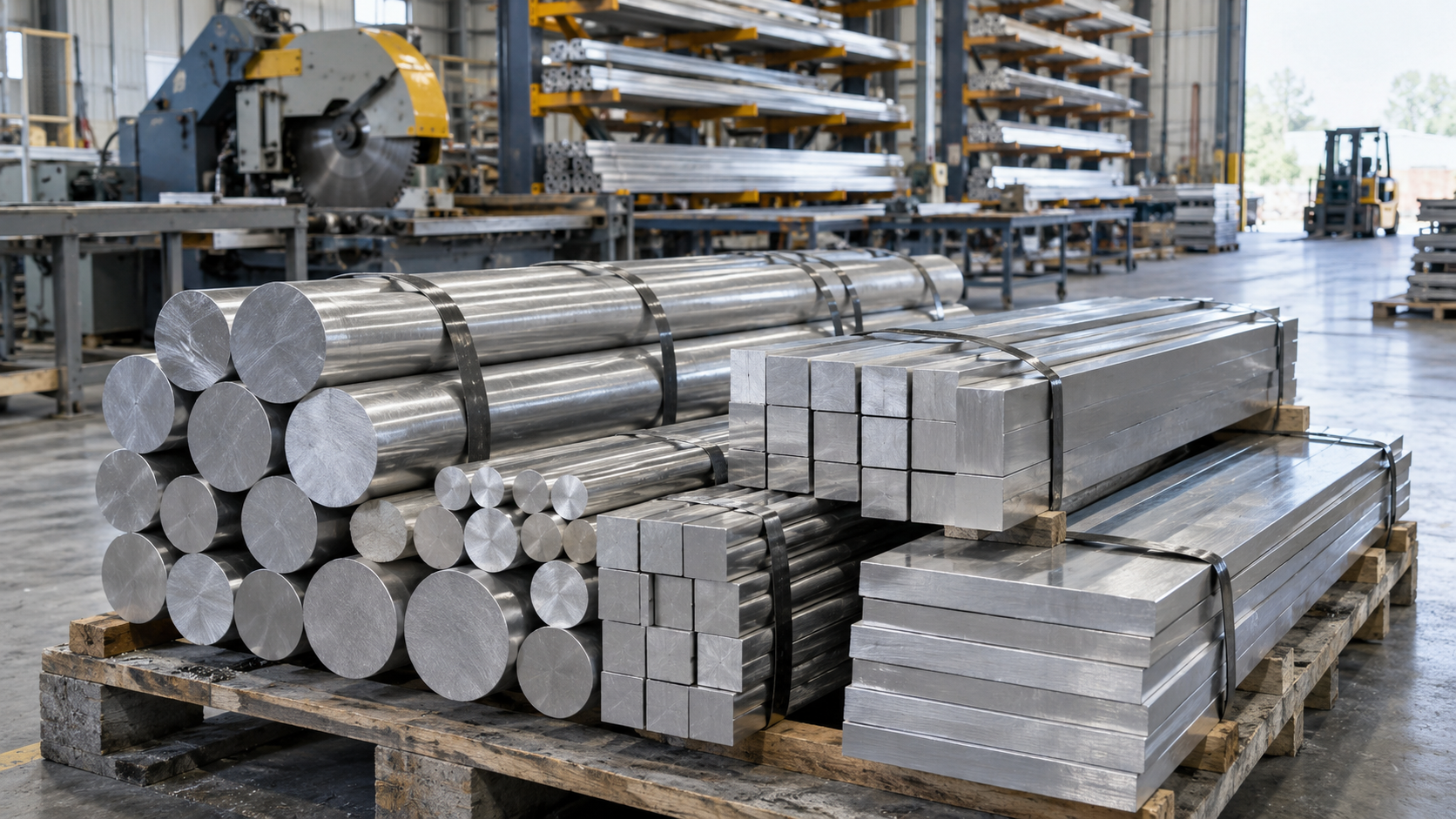
One of the first decisions is determining which bar shape best matches the finished component. Starting with material that is already close to the required dimensions can reduce machining time and scrap.
Round Aluminum Bar
Round bar is commonly selected for parts that will be turned or machined on a lathe. It can be used for shafts, pins, spacers, rollers, fittings, and other cylindrical components.
When ordering round bar, confirm both the required diameter and length. If the material will undergo substantial machining, your fabricator may also want enough additional stock to achieve the final dimensions.
Square Aluminum Bar
Square bar works well for brackets, supports, fixtures, frames, machined blocks, and components that require uniform dimensions on four sides.
It can also reduce the amount of machining necessary when the finished part already has a square or rectangular profile.
Flat and Rectangular Aluminum Bar
Flat bar is widely used for brackets, reinforcement, mounting plates, trim, supports, and fabricated assemblies.
When specifying flat bar, both thickness and width matter. A small change in either dimension can affect load capacity, fit, weight, and the amount of additional processing required.
Selecting the closest available size to your finished part can help control material costs and machining time.
Understand Alloy and Temper Requirements
Not every aluminum bar performs the same way. Aluminum is available in multiple alloys and tempers, each designed to provide different mechanical and fabrication characteristics.
Common aluminum alloys found throughout the industry include 6061 and 6063, although the correct choice depends on the application. Other alloys may be selected when a project requires specific strength, machining, forming, corrosion resistance, or finishing characteristics.
Temper also matters because it describes how the aluminum has been treated to achieve certain mechanical properties.
Before ordering, consider questions such as:
- How much strength does the component require?
- Will the bar be machined extensively?
- Does it need to be welded?
- Will it be bent or formed?
- Will the finished part be exposed to moisture?
- Does the project require a particular surface finish?
If an engineering drawing specifies an alloy and temper, that information should be included with the material request.
If it does not, discussing the application with an experienced metal supplier can help identify what information needs to be confirmed before production begins.
Pay Attention to Dimensions and Tolerances
Ordering the correct nominal size is important, but some projects require more than standard dimensions.
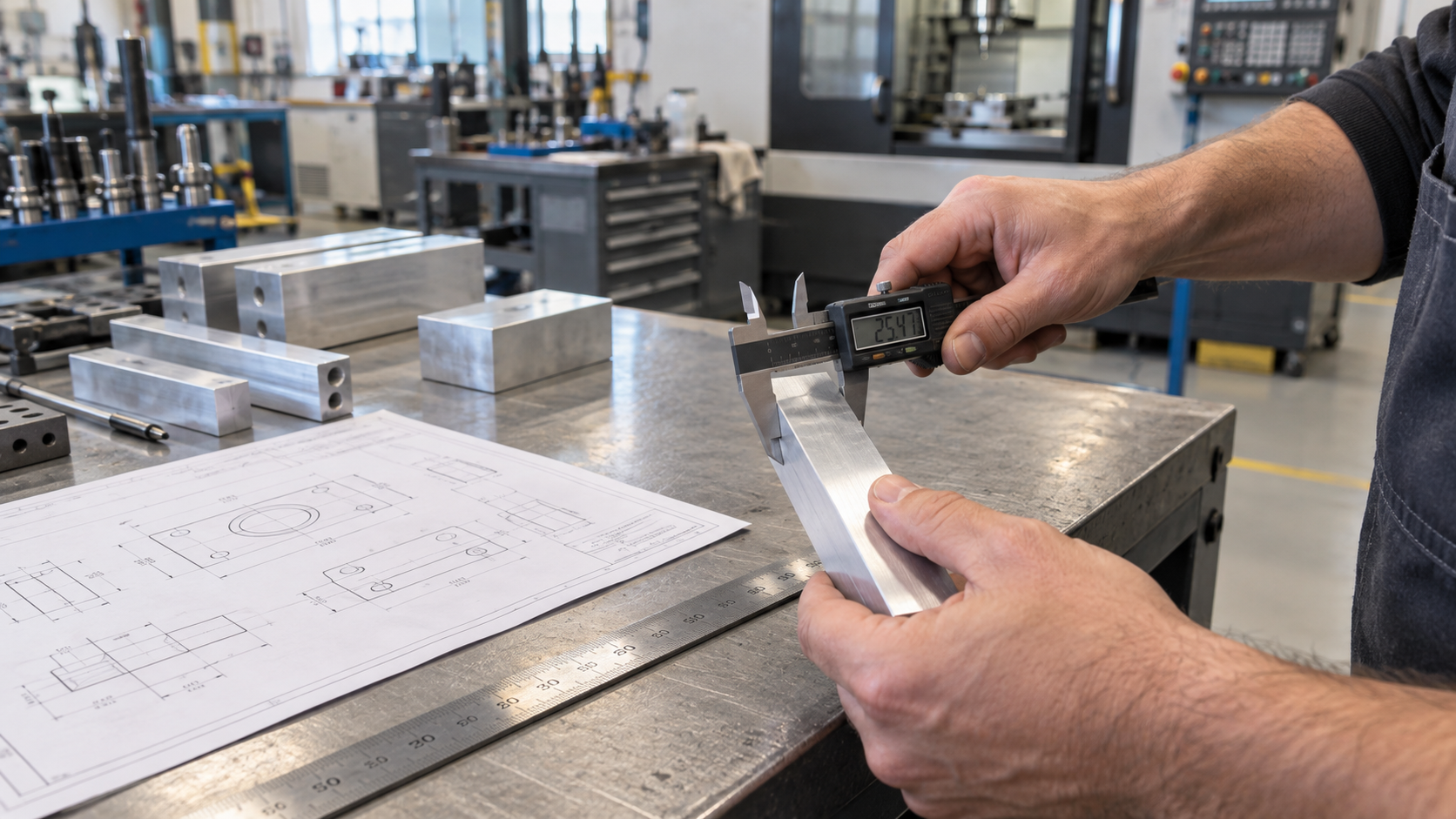
A manufacturer producing precision components may need tighter dimensional requirements than a shop producing general structural brackets. Machining allowances, straightness, surface condition, and dimensional tolerances can all affect the finished product.
Before requesting your aluminum bar supply, review the print or production requirements carefully.
Make sure the supplier understands:
- Required diameter, width, or thickness
- Desired bar length
- Quantity
- Alloy and temper
- Dimensional tolerances when applicable
- Surface requirements
- Any special processing needed before delivery
Providing complete specifications at the beginning makes quoting more accurate and helps prevent unexpected issues after the material arrives.
Consider Cutting Before the Material Reaches Your Shop
Purchasing full-length material is not always the most efficient option.
If the aluminum will ultimately be divided into smaller pieces, having material cut closer to the required dimensions can reduce handling and shorten preparation time for the production team.
This can be especially helpful when a business needs multiple repeat pieces for machining, fabrication, assembly, or maintenance work.
Del Fabrication Co. provides metal distribution alongside fabrication capabilities such as saw cutting, laser cutting, tube laser cutting, and bending. Depending on the material and project requirements, working with a supplier that understands both raw material and downstream processing can make procurement simpler.
Instead of looking at aluminum only as a commodity, consider how it will move through the entire production process.
Calculate Material Needs Carefully
Running short on aluminum during production can stop a job at the worst possible time. Ordering far more than necessary can also tie up budget and storage space.
Review the bill of materials, finished part dimensions, expected cut loss, machining allowance, and potential scrap before finalizing the quantity.
For repeat production, it can be useful to keep records of actual material usage from previous runs. That gives purchasing teams a more accurate baseline for future orders.
A supplier can also help confirm available stock lengths so your team can plan cuts more efficiently.
Why Supplier Reliability Matters
Price is important when sourcing metal, but it should not be the only consideration.
Production schedules depend on having the correct material available when it is needed. Receiving the wrong size, incorrect alloy, or damaged material can create costs that are much larger than a small difference in the original material price.
A dependable aluminum bar supplier should make it easy to communicate specifications, confirm availability, coordinate processing, and plan delivery.
Del Fabrication Co. supports metal distribution for customers in Cook County and beyond, with aluminum, stainless steel, and steel products along with fabrication and delivery capabilities. For manufacturers and fabricators, having material supply and processing support available through one source can help streamline purchasing and production planning.
What Information Should You Provide When Requesting a Quote?
A detailed request helps your supplier respond faster and reduces the need for additional back-and-forth communication.
Material Specifications
Provide the aluminum alloy and temper when known, along with the required bar shape.
Dimensions
List the diameter for round bar or the width and thickness for square and flat products. Include required lengths as well.
Quantity
Specify the number of full bars, cut pieces, or total material required.
Processing Requirements
Mention whether the material needs saw cutting or another fabrication service before delivery.
Schedule
Include the date the material is needed so availability and production requirements can be discussed early.
For more complex projects, providing a drawing can make it easier to confirm dimensions and processing requirements.
Find the Right Aluminum Bar for Your Next Project
The right aluminum bar starts with a clear understanding of the finished application. Shape, alloy, dimensions, tolerances, quantity, processing, and delivery requirements all play a part in choosing material that will work efficiently once production begins.
Taking a little extra time to review those details before placing an order can reduce waste, simplify fabrication, and help keep jobs moving on schedule.
If your business needs dependable aluminum bar supply along with professional cutting, fabrication, or delivery support, contact the team at Del Fabrication Co. Discuss your material specifications and project requirements with their team to find the right aluminum products for your next job.